
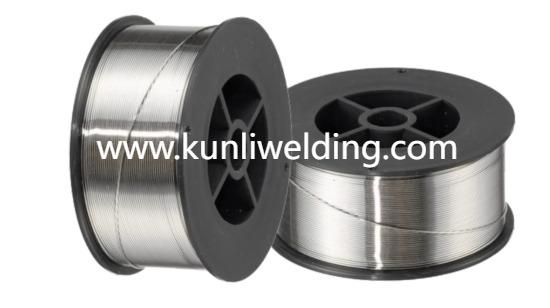
Soldering aluminum braided wire for marine use demands clear steps and good materials. Many Aluminum Braided Wire Manufacturers recommend combining mechanical joining with correct soldering and sealing to reduce the chance of failure in salt air and spray. This article explains practical, safe, and reliable steps to make joints that resist corrosion in marine conditions.
Aluminum presents two main challenges: a thin but tenacious oxide layer and rapid heat dissipation. The oxide blocks wetting by most solders. Salt and moisture on a vessel accelerate electrochemical corrosion if a joint is not protected. In marine systems you often need both mechanical strength and an electrically sound connection. Soldering alone should not be the only method for mechanical attachment; instead, use solder to improve electrical continuity while relying on a proper mechanical connector for strength.
Materials and tools you will need include an aluminum-specific flux, filler alloy or solder compatible with aluminum, a controlled-heat torch or high-power soldering iron, a stainless-steel wire brush or abrasive pad, crimp sleeves or compression fittings, adhesive-lined heat-shrink tubing, and a marine-grade epoxy or sealant. Choose a filler alloy recommended for aluminum; standard tin-lead or lead-free solders for copper do not properly wet aluminum and will fail quickly in marine environments.
Step 1: Create a mechanical connection first. Use a crimp sleeve or compression fitting rated for marine use. The mechanical connection carries the load, while soldering improves electrical contact and helps prevent fretting corrosion. Step 2: Prepare the surface. Abrade the braid and any conductor until bright metal appears. Work quickly to avoid re-oxidation. Use a stainless-steel brush or fine abrasive and remove all visible oxide. Step 3: Apply aluminum flux immediately after cleaning. The right flux will remove oxide during heating and help the filler wet the metal. Do not use rosin flux for this purpose; choose a flux specified for aluminum. Step 4: Heat and introduce filler. Use steady, even heat so the flux can activate and the filler can flow into the braided strands. Avoid over-heating nearby insulation. Step 5: Clean and seal. Remove flux residues per the flux manufacturer's instructions and then apply adhesive-lined heat-shrink. Add marine-grade epoxy or sealant over and around the heat-shrink where exposure to salt spray is likely.
To prevent corrosion over time, use adhesive-lined heat-shrink as the primary environmental barrier, then add a secondary layer of marine epoxy for long-term protection. Apply a thin film of dielectric grease under the heat-shrink before shrinking to reduce moisture ingress near transitions. Periodic inspection is advisable in the first months to confirm there is no moisture entry.
Common mistakes include relying solely on solder for mechanical strength, using the wrong flux, failing to clean adequately, and not sealing the joint. Avoid these errors by planning for both mechanical and environmental protection before you start soldering.
When selecting materials, check compatibility charts from reputable suppliers. If you need additional product guidance or recommended consumables for reliable marine-grade aluminum connections, consider the offerings and technical notes available from Kunli and visit https://kunliwelding.psce.pw/8p6qdb for more information.

 Arabic
 French
 Spanish
 Portuguese
 Deutsch
 Turkish
 Dutch
Dutch
 Italiano
 Russian
 Romaian
 Portuguese (Brazil)
 Greek
Greek