
A central tension in any action RPG lies between the thrilling randomness of legendary loot and the player's desire to pursue a specific, theory-crafted character build. Diablo 4 addresses this classic frustration with a foundational system that elegantly bridges the gap: the Codex of Power. This isn't just a collection of abilities; it is a permanent, account-wide library of legendary effects that fundamentally reshapes the loot chase from a hope-filled gamble into a structured, deterministic journey. It empowers players to plan, experiment, and steadily build towards their ideal combat fantasy.
The system works by extracting the legendary power from a salvaged piece of gear. Once collected, that specific power is forever recorded in your Codex, available to be imprinted onto any rare or legendary item of the appropriate type. This simple mechanic has profound implications. The crushing disappointment of finding a perfect-rolled weapon with a useless legendary effect is largely eliminated. Instead, that weapon becomes a superb blank canvas. The player can then visit an Occultist and, for a cost of materials, stamp their chosen effect from the Codex directly onto it. This transforms a good drop into a great one, aligning the gear with the player's chosen build path. It provides a crucial safety net against poor luck and places a high value on well-rolled base items, shifting some of the endgame focus from pure effect hunting to stat optimization.
Furthermore, the Codex is a powerful engine for experimentation and incremental progress. Early in a season, finding any version of a desired legendary power allows you to add its base form to your arsenal immediately. While the power's strength is fixed at its minimum roll when applied from the Codex, it allows you to start playing your intended build right away. The hunt then evolves: you are no longer searching for the power itself, but for a stronger, dropped version of it to replace the minimum-rolled one in your library. This creates a satisfying two-tiered progression. First, you acquire the functionality. Then, you perfect it. This journey encourages players to engage deeply with all of the game's activities—**Nightmare Dungeons**, Helltides, and world events—as any activity could yield the upgraded legendary aspect they seek.
The Codex of Power also subtly encourages exploration and completionism. Many of the most valuable aspects are not found on random loot at all, but are permanently unlocked by completing specific, often challenging, **Dungeons** scattered across Sanctuary for the first time. This ties character power directly to world exploration and mastery, rewarding players for fully engaging with the map and conquering its varied challenges. It ensures that every new character, or every seasonal rebirth, begins with a foundational toolkit of powers to build upon, making the early game feel more intentional and less reliant on blind fortune.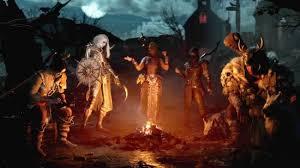
In the end, the Codex of Power is a masterstroke of player-friendly design. It respects the player's time and intelligence, offering a clear path toward a chosen goal amidst the beautiful chaos of random loot. It turns the entire world of Sanctuary into a purposeful collection quest, where every dungeon cleared and every legendary salvaged is a permanent step toward greater strength and more diverse playstyles. By giving players agency over their power progression, Diablo 4 Items ensures that the true reward is not just what you find, but what you choose to create with it.

 Arabic
 French
 Spanish
 Portuguese
 Deutsch
 Turkish
 Dutch
Dutch
 Italiano
 Russian
 Romaian
 Portuguese (Brazil)
 Greek
Greek