
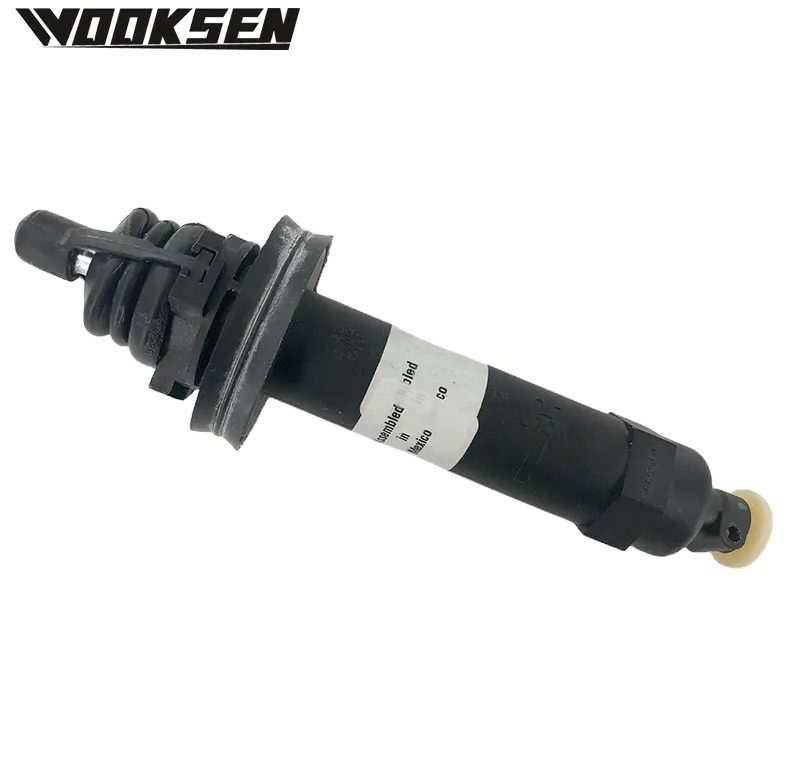
The clutch slave cylinder operates quietly within a vehicle’s hydraulic clutch system, yet its influence on driving behavior is substantial. Acting as the final actuator in the hydraulic chain, the clutch slave cylinder converts fluid pressure into linear force. This movement directly controls clutch disengagement, allowing the driver to shift gears with coordination and confidence.
Hydraulic efficiency defines how well a clutch slave cylinder performs. A consistent internal bore surface ensures stable piston travel, while precision-machined components reduce friction during operation. Any irregularities inside the cylinder may disrupt pressure balance, resulting in delayed clutch response or uneven pedal feel. Such symptoms often appear gradually, making routine inspection valuable.
Design variations exist depending on vehicle layout and transmission type. Some clutch slave cylinder models use a push-rod configuration, applying force externally to the clutch fork. Others rely on concentric arrangements that combine the slave cylinder and release bearing into a single unit. These compact designs reduce part count but require accurate alignment during installation.
Environmental exposure also impacts durability. Road debris, heat from the engine, and vibration from the drivetrain all place stress on the clutch slave cylinder housing. Protective coatings and dust seals help limit contamination. When these protective elements degrade, moisture or particles may enter the system, affecting seal performance and fluid integrity.
Fluid compatibility remains another critical factor. Using the correct hydraulic fluid type supports seal longevity and pressure stability. Mixing incompatible fluids can cause swelling or breakdown of internal materials. During replacement or servicing, flushing old fluid from the system helps maintain consistent operation.
From a diagnostic perspective, clutch slave cylinder issues often present through subtle signs. Drivers may notice increased pedal travel, resistance changes, or difficulty selecting gears. While such symptoms can relate to other clutch components, the slave cylinder remains a common source of hydraulic imbalance. Early diagnosis reduces the risk of broader system failure.
Manufacturing standards emphasize accuracy and repeatability. Tolerances within the clutch slave cylinder must support smooth piston motion without excessive clearance. Quality control processes often include pressure testing and seal inspection to ensure reliable performance under varying conditions.
In daily driving, the clutch slave cylinder contributes to the overall harmony between driver input and vehicle response. Its ability to deliver controlled force supports predictable clutch behavior, enhancing driver confidence. Although small in size, this component carries significant responsibility within the manual transmission system.

 English
 French
 Spanish
 Portuguese
 Deutsch
 Turkish
 Dutch
Dutch
 Italiano
 Russian
 Romaian
 Portuguese (Brazil)
 Greek
Greek