
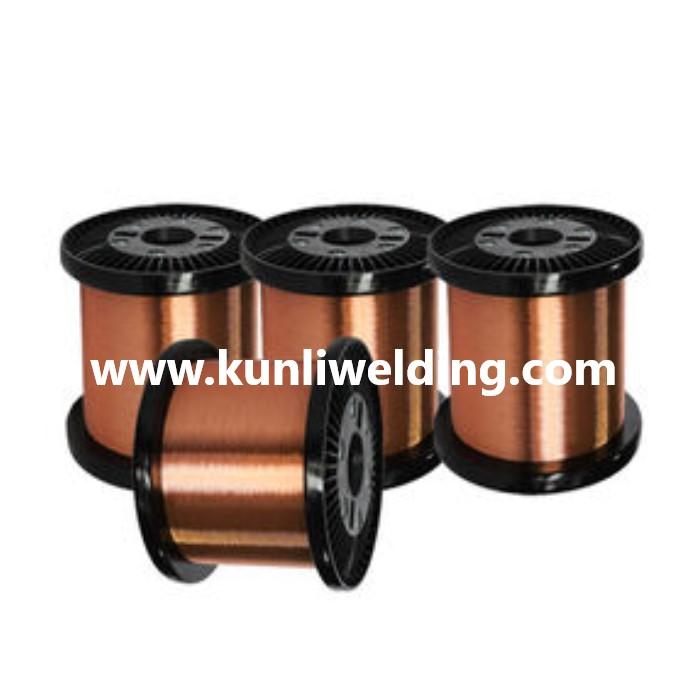
Practical parameter guidance helps fabricators translate lab trials into steady shop performance. Aluminum Welding Wire ER4943 is often selected for applications that require a dependable combination of ductility and corrosion aware behavior, and getting consistent results depends on a clear approach to the welding parameters rather than on single point settings.
Begin with power source and transfer mode choices. For many fabrication contexts a stable power supply that permits controlled energy delivery reduces variability in the puddle. Where mechanised cells are used, modes that regulate peak energy can help control penetration on variable section thicknesses. For manual work, settings that maintain a steady arc without excessive spatter reduce cleaning and finishing time. Aim to pair the chosen transfer approach with the wire diameter and the joint family to produce a predictable bead profile.
Shielding and gas flow are critical to deposit chemistry and arc stability. A shielding regime that maintains full coverage at the arc prevents excessive oxide formation and reduces porosity. Avoid turbulent flows that draw drafts across the arc and disturb the puddle. Nozzle condition and correct gas lens use matter in the cell and on site so inspect these items during each change over. Consistent shielding supports uniform bead color and eases downstream finishing work.
Wire feed and drive system behaviour affect both arc stability and feed reliability. Match wire temper and diameter to drive roll groove geometry and set feed pressure to the minimum required to advance the wire without slipping. Too much pressure flattens aluminium wire and increases the chance of feed buckling inside the liner. For long liner runs select low friction liners and avoid tight routing that creates drag. When feed hardware and spool format are aligned with supplier recommendations, reproducible deposition is easier to achieve.
Arc length and travel rhythm are procedural levers that influence heat input. Keep arc length compact and consistent to manage puddle width and penetration. Travel rhythm should be steady so the weld pool does not oscillate between cold and overheated states. Where operators vary technique across shifts, document visual cues for an acceptable arc and provide quick reference reminders at cells to reduce variability.
Heat management across passes is important for achieving the intended microstructure. Control inter pass conditions and allow for adequate cooling when building multi pass joints so the heat affected region does not widen unnecessarily. When distortion or softening risk is a concern, sequencing and controlled pause times between passes help preserve parent metal characteristics while still achieving good fusion and bead geometry.
Joint preparation and cleanliness directly affect parameter effectiveness. Remove oils and loose oxides and maintain clean consumable handling. A well cleaned joint accepts the weld deposit with fewer inclusions and allows coatings to adhere uniformly after welding. When visible assemblies require tight color or finish expectations, include the finishing sequence in trial welds so the combined process is validated.
Inspection of consumable condition and spool handling shortens qualification time. Verify spool winding and wire roundness before threading and use supplier notes to set spool brake settings and mounting orientation. Batch identifiers and simple incoming checks help trace anomalies when they appear and reduce the time needed to confirm whether a feed issue originated in handling or in the welding cell.
Parameter windows are safer than single numbers. Document a practical range for current, travel speed and wire feed relative to joint thickness and access conditions and pair that range with visual acceptance criteria for bead shape and toe formation. Train operators to use the documented window and to log any deviations so quality teams can correlate deviations with inspection outcomes and refine the window over time.
Operator training and routine equipment maintenance are the last links in the chain. Consistent torch presentation, scheduled replacement of contact parts and regular liner inspection prevent drift that otherwise undermines the parameter set proved during trials. Small daily checks and short audits keep the process within the qualified envelope and reduce the incidence of rework across shifts.
Qualification should mirror production. Run representative coupons that replicate joint geometry, restraint and finishing sequence so inspection teams verify the entire chain. Retain test records and link them to spool batch numbers for traceability. That approach shortens acceptance cycles and supports reproducible performance when production scales or when work shifts to a new site.
As market activity around infrastructure and advanced mobility programs grows, treating parameter setting as a systems activity yields real benefits. Engage suppliers early for spool handling notes and application guidance, document parameter windows with practical visual cues, and pair trials with finishing checks so the welding procedure produces consistent, auditable results. For product and technical resources related to aluminium welding wire consult the manufacturer pages at www.kunliwelding.com .

 English
 Arabic
 French
 Spanish
 Portuguese
 Deutsch
 Turkish
 Italiano
 Russian
 Romaian
 Portuguese (Brazil)
 Greek
Greek