
Path of Exile, widely known as POE 1 among its community, has established itself as one of the most intricate and rewarding action RPGs ever developed. Rather than simplifying its systems for mass appeal, it embraces complexity and player agency. Every mechanic, from character progression to endgame mapping, is built around freedom of choice and meaningful consequence.
The journey begins in Wraeclast, a brutal continent shaped by corruption and exile. The atmosphere is bleak and oppressive, reinforcing the sense that survival must be earned. Ruined cities, haunted forests, and underground labyrinths create a world that feels both dangerous and immersive. Combat encounters are rarely trivial, and even common enemies can punish careless builds or poor positioning.
One of the defining elements of Path of Exile is its massive passive skill tree. Unlike traditional class systems that confine players to fixed archetypes, POE 1 provides an enormous web of interconnected nodes. Each class begins in a different region of the tree, but players are free to travel across it, unlocking combinations that defy expectations. A melee-oriented character might branch into elemental scaling, while a spellcaster could invest heavily in defensive layers. This flexibility ensures that experimentation is not only possible but encouraged.
The skill gem system adds another layer of depth. Active skills are not permanently tied to a character’s class; instead, they come from gems inserted into equipment. Support gems modify these skills in powerful ways, changing damage types, adding projectiles, or altering mechanics entirely. The interaction between socket colors, links, and item bases creates a dynamic relationship between gear and abilities. Finding the perfect combination becomes a strategic pursuit that evolves throughout progression.
Loot acquisition and crafting systems are central to long-term success. Rare items with well-rolled modifiers can dramatically enhance a build’s effectiveness. Unique items often introduce mechanics that redefine playstyles. Crafting currencies allow players to modify equipment, reroll attributes, or enhance potential. Mastery of crafting can mean the difference between a functional build and an optimized powerhouse.
The endgame mapping system extends replayability beyond the campaign. Maps generate randomized zones with adjustable difficulty. Modifiers increase both risk and reward, encouraging calculated decisions. High-tier encounters demand precise builds and strong mechanical understanding. Seasonal leagues regularly introduce new gameplay mechanics, ensuring that POE 1 continues to evolve and challenge its player base.
Multiplayer features support cooperative play, allowing groups to tackle difficult bosses and share strategies. However, solo progression remains entirely viable, preserving flexibility for different playstyles.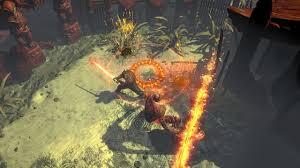
Ultimately, Path of Exile stands out for its commitment to depth and player-driven design. U4GM POE 1 rewards strategic thinking, experimentation, and dedication. It offers an ever-expanding journey through a harsh world where every decision shapes the path forward and mastery is earned through knowledge and persistence.

 English
 French
 Spanish
 Portuguese
 Deutsch
 Turkish
 Dutch
Dutch
 Italiano
 Russian
 Romaian
 Portuguese (Brazil)
 Greek
Greek