
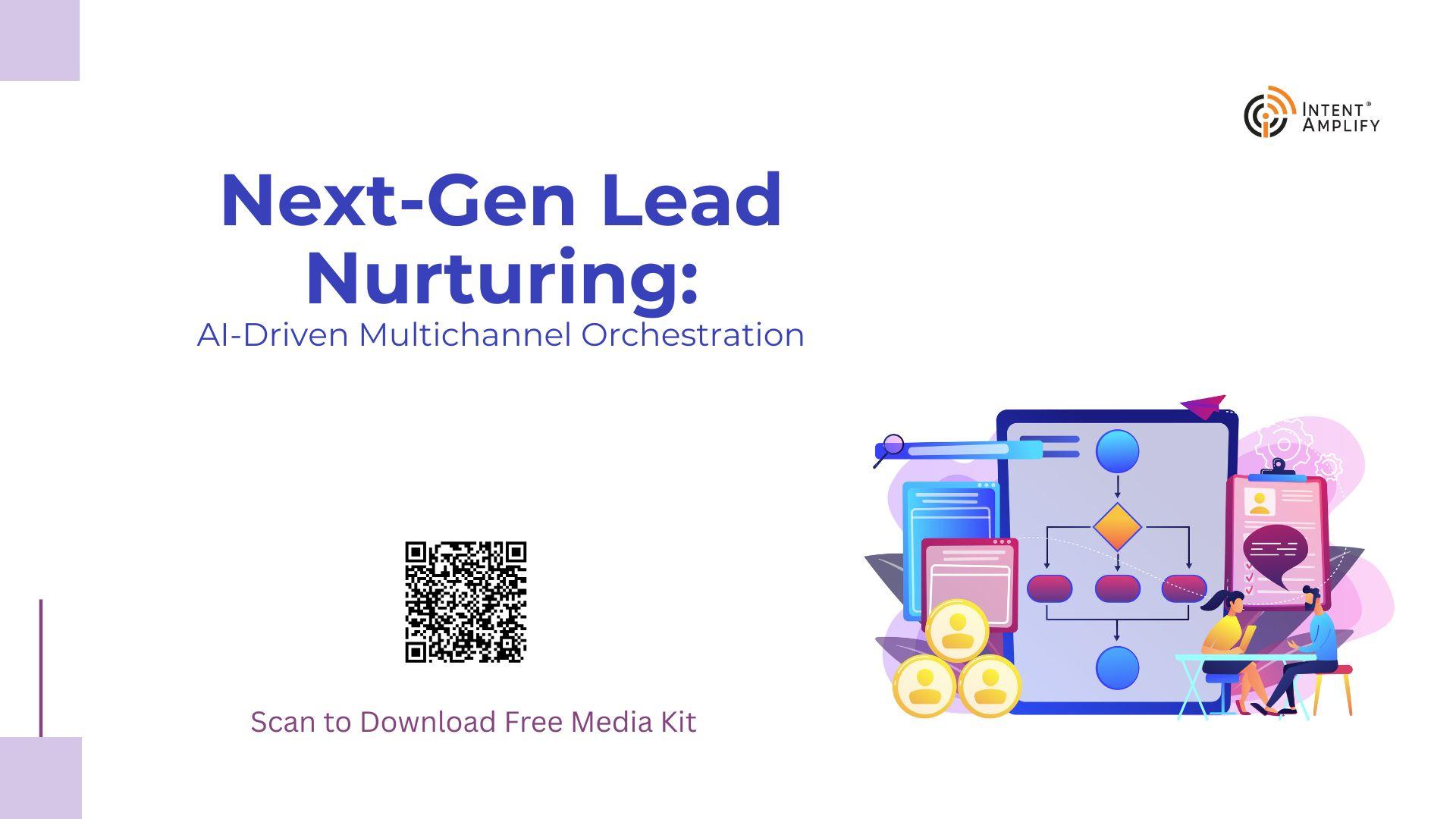
The modern B2B buyer journey has become increasingly fragmented and complex. Prospects interact with your organization across multiple channels simultaneously—email, website, social media, content platforms, and direct sales conversations. Yet most organizations manage these touchpoints in isolation, creating disjointed experiences where messaging conflicts, timing misses engagement windows, and opportunities fall through cracks between departmental silos.
Traditional lead nurturing approaches treat each channel independently. Email campaigns operate on their own schedule. Website experiences follow their own logic. Sales outreach happens based on when representatives get around to it. This fragmentation creates frustration for prospects receiving conflicting messages and missed opportunities for organizations unable to coordinate their engagement.
Artificial intelligence is revolutionizing lead nurturing through multichannel orchestration. These sophisticated systems coordinate messaging, timing, and channel selection across all prospect touchpoints, delivering consistent, relevant engagement that builds momentum toward conversion. Organizations implementing AI-driven orchestration report dramatic improvements in conversion rates, sales cycle acceleration, and overall revenue growth.
Explore the Future of Lead Nurturing
Discover how Intent Amplify's AI-powered multichannel orchestration transforms lead nurturing effectiveness for B2B organizations. Our comprehensive media kit reveals proven strategies for coordinating engagement across email, web, content, and sales channels. Learn how leading companies orchestrate personalized journeys for thousands of prospects simultaneously, dramatically improving conversion rates and accelerating sales cycles. Download your free media kit today.
Understanding Multichannel Orchestration in Modern Demand Generation
Multichannel orchestration represents a fundamental shift in how marketing and sales teams approach lead engagement. Rather than managing individual channels independently, orchestration treats the entire prospect journey as an integrated experience where each touchpoint builds on previous interactions.
Imagine a prospect downloading a product comparison guide from your website. Traditional approaches would add this prospect to an email nurture sequence based on lead magnet topic. They'd receive scheduled emails based on predetermined sequences. If they engaged with certain emails, they might advance to different tracks. But this prospect might simultaneously visit your website multiple times, click on pricing pages, and attend a webinar. These signals operate independently without coordinating overall engagement strategy.
Orchestrated lead nurturing integrates these signals. The system recognizes the prospect's progression across all channels. When they download the comparison guide and visit pricing pages, orchestration coordinates that they've moved into active evaluation stage. The email sequence adjusts to deliver evaluation-stage content rather than awareness-stage material. Website experiences personalize to show relevant case studies and implementation information. If a salesperson reaches out, they reference the prospect's demonstrated research areas rather than launching generic qualification conversations.
This integration creates dramatically different prospect experiences. Instead of receiving generic emails disconnected from their demonstrated interests, prospects receive coordinated engagement reflecting their actual journey. This relevance dramatically improves engagement rates and conversion probability.
The Role of Artificial Intelligence in Lead Orchestration
Artificial intelligence serves as the intelligence layer making multichannel orchestration possible at scale. Human marketers cannot manually coordinate engagement across hundreds or thousands of prospects simultaneously while monitoring dozens of data streams and adjusting strategy in real-time.
AI systems continuously monitor prospect behavior across all channels. Website visits, email opens and clicks, content downloads, form submissions, and social engagement all feed into a unified prospect profile. The system analyzes these interactions in context, understanding not just what actions the prospect took but what sequence of actions creates meaningful patterns.
Machine learning algorithms identify progression patterns indicating movement through buying stages. When prospects exhibit specific behavior combinations, these patterns reliably predict advancement toward purchase decisions. The system learns these patterns from historical conversion data, continuously refining understanding of what actually predicts buying behavior in your specific business context.
Based on this analysis, AI makes real-time decisions about optimal engagement strategy. Should this prospect receive an email immediately or would a website experience prove more valuable at this moment? Should messaging focus on business value or technical capabilities? Would a sales conversation be welcomed or premature? These decisions get made individually for each prospect based on their specific situation rather than applying one-size-fits-all templates.
The orchestration system also manages timing intelligently. Rather than sending emails on predetermined schedules, AI identifies when individual prospects are most likely to engage. Sending your message when someone is already actively researching your solution category dramatically outperforms sending the same message when their attention is elsewhere. AI learns optimal timing for each prospect.
Key Components of Effective Multichannel Orchestration
Successful orchestration requires several foundational components working in concert. First, unified data architecture must bring together signals from all prospect touchpoints. Website analytics, marketing automation platforms, CRM systems, sales engagement tools, and any other systems capturing prospect interactions need to feed into integrated data architecture. This doesn't require complex implementation in most cases—modern platforms provide connectors enabling data synchronization.
Prospect profiling and scoring represents the second critical component. Rather than simple lead scoring based on limited criteria, comprehensive orchestration requires detailed prospect profiles understanding who they are, what they're interested in, where they are in their journey, and what engagement approach would resonate. These profiles update continuously as new signals emerge.
Content intelligence forms the third essential element. Orchestration requires understanding your content inventory deeply. Which content pieces address awareness-stage questions? Which help prospects in evaluation mode? Which address implementation concerns? AI systems need this content taxonomy to recommend appropriate material for each prospect's situation.
Engagement logic provides the fourth critical component. How should the system respond to different behavioral signals? If a prospect visits pricing pages repeatedly, what action should orchestration trigger? If someone downloads competitive analysis, what next step would be appropriate? These decision trees guide orchestration behavior.
Finally, channel management capabilities enable actual coordination across channels. The orchestration system needs to communicate with email platforms to trigger messages, website personalization engines to customize experiences, and sales tools to alert representatives about high-priority prospects. Integration with these channels enables orchestration vision to become operational reality.
Real-World Applications Across B2B Industries
Healthcare technology companies apply multichannel orchestration to nurture hospital purchasing committees across diverse functional areas. When a prospect from a target health system visits your website researching clinical workflow integration, the system identifies them as high-intent. Email sequences deliver content specific to clinical operations. Website experiences highlight clinical case studies and implementation references. If a salesperson reaches out, they discuss clinical integration specifics rather than launching generic needs analysis. Meanwhile, other prospects from the same health system interested in financial integration receive completely different coordinated nurturing addressing revenue cycle concerns.
Enterprise software vendors use orchestration to manage complex buying committees across multiple departments simultaneously. When prospects from target accounts signal interest in specific modules or departments, orchestration targets nurturing addressing their specific departmental needs. Finance team members receive content about financial management capabilities and ROI. Operations team members receive content about operational efficiency and automation. When these prospects connect with sales teams, representatives have clear visibility into what each stakeholder cares about.
Manufacturing companies deploy orchestration to nurture prospects involved in facility expansion or production optimization initiatives. When facility managers and purchasing decision-makers signal active research into production efficiency solutions, orchestration coordinates engagement addressing their specific challenges. Facility managers receive content about equipment capabilities and facility requirements. Procurement teams receive content about vendor reliability and cost structures. Engineering teams receive technical specifications. This coordinated approach builds organizational momentum toward vendor selection.
Financial services firms apply orchestration to nurture companies experiencing growth, acquisition activity, or regulatory transitions requiring financial services solutions. The system recognizes these signals and coordinates nurturing addressing specific needs triggered by these business changes. Rather than generic financial services messaging, content directly addresses challenges created by the prospect's specific situation.
See Orchestrated Lead Nurturing in Action
Understanding orchestration theory provides valuable context. Experiencing how it transforms your organization's lead engagement proves transformative. Intent Amplify's team would welcome demonstrating how our platform coordinates nurturing across channels, personalizes at scale, and delivers measurable impact on pipeline and revenue.
During your personalized demo, we'll show how orchestration coordinates your email, web, content, and sales systems into an integrated experience. You'll see how AI identifies prospect progression patterns and adjusts engagement strategy accordingly. Experience firsthand how orchestration accelerates sales cycles while improving conversion rates.
Building Your Orchestration Strategy
Implementing effective multichannel orchestration begins with honest assessment of current capability. Most organizations maintain sophisticated marketing technology but fail to leverage it orchestrated manner. You likely already have email marketing, web analytics, CRM systems, and potentially marketing automation platforms. The challenge involves coordinating these systems rather than adding new tools.
Start by mapping your current technology stack and data flows. Where do prospect signals originate? Which systems maintain prospect information? Where are disconnects preventing signal flow? This mapping reveals integration opportunities and helps prioritize implementation sequencing.
Next, develop content strategy supporting orchestration. Audit your content inventory and categorize pieces by buying stage and functional role they address. Identify content gaps where your resource library lacks material needed for specific prospect situations. Content gaps represent immediate opportunity areas for content development.
Define your buyer journey stages and the progression signals indicating advancement. What does early awareness look like for your prospects? What distinguishes evaluation-stage activity? How do you recognize when prospects move toward purchase decisions? Clear definitions enable the orchestration system to track progression accurately.
Establish decision logic for your orchestration system. What should happen when prospects exhibit specific signal combinations? If a prospect from a high-value target account visits your pricing page multiple times while researching competitive solutions, what orchestration should trigger? These business rules guide system behavior.
Finally, establish success metrics and monitoring. Track how orchestration affects prospect progression through your pipeline. Monitor whether prospects entering orchestrated programs convert at higher rates than those engaging through non-orchestrated channels. Measure sales cycle acceleration. Ultimately, measure revenue impact to demonstrate orchestration business value.
Overcoming Common Implementation Challenges
Organizations implementing orchestration frequently encounter specific obstacles. Data integration challenges often prove most significant. Prospect data scattered across multiple systems with different data structures requires thoughtful reconciliation. Modern data integration platforms and APIs simplify this significantly, but planning remains essential.
Tool coordination complexity can overwhelm organizations trying to implement everything simultaneously. Rather than attempting full orchestration immediately, start with key channels most important to your business. Implement orchestration between email and website, for example, before adding sales engagement coordination. Phased approaches reduce complexity and enable learning before scaling.
Content readiness frequently surprises organizations. While most have substantial content libraries, orchestration reveals gaps. Rather than rushing to fill gaps with mediocre content, prioritize gaps affecting highest-value prospect segments. Build content addressing most critical journey stages first.
Sales and marketing alignment proves essential but sometimes challenging. Sales teams occasionally resist taking direction from prospect signals and orchestration recommendations. Frame orchestration as enhancing sales effectiveness rather than restricting their autonomy. Sales teams still control their conversations—orchestration simply helps them prepare better by understanding what prospects care about.
Measuring Orchestration Impact
Effective measurement requires moving beyond traditional marketing metrics. While email open rates and website traffic matter, orchestration's true value appears at pipeline and revenue levels.
Track prospect progression through orchestrated programs compared to non-orchestrated controls. Do prospects engaged through orchestrated channels progress faster through your sales pipeline? Do they convert at higher rates? Do they represent higher deal values? These metrics demonstrate orchestration effectiveness.
Monitor sales productivity metrics. Do salespeople report that prospects engaged through orchestration arrive better educated about your solutions? Do these prospects ask more sophisticated questions suggesting deeper evaluation? Do sales conversations progress more efficiently when reps know exactly what prospect research indicates about their interests?
Measure pipeline velocity specifically. How long do opportunities from orchestrated programs remain in each stage? Do these opportunities move faster through your sales process than traditionally-sourced leads? Shorter sales cycles demonstrate that orchestration effectively engages prospects when they're most receptive.
Ultimately, measure revenue impact. What percentage of revenue came from accounts engaged through orchestrated programs? How does customer acquisition cost compare for orchestrated versus traditional approaches? Does revenue per customer differ between these segments? These business metrics ultimately determine orchestration success.
Let's Discuss Your Orchestration Strategy
Every organization's sales process, buyer journey, and market dynamics create unique orchestration requirements. Your target prospects, decision-making process, and competitive environment likely differ substantially from other organizations in your industry. Our team of demand generation experts would welcome discussing your specific challenges and exploring how multichannel orchestration can transform your results.
About Us
Intent Amplify® has become the trusted partner for B2B organizations seeking to transform their lead nurturing and demand generation strategies since 2021. We deliver cutting-edge AI-powered multichannel orchestration solutions that coordinate engagement across email, web, content, and sales channels. Our full-funnel, omnichannel approach helps organizations across healthcare, IT and data security, cyberintelligence, HR technology, martech, fintech, and manufacturing improve conversion rates, accelerate sales cycles, and drive sustainable revenue growth. Our skilled professionals take responsibility for understanding your unique buyer journey, building orchestration strategies reflecting your business model, and delivering the coordinated engagement that converts prospects into customers.
Contact Us
Intent Amplify® 1846 E Innovation Park Dr, Suite 100 Oro Valley, AZ 85755
Phone: +1 (845) 347-8894, +91 77760 92666 Email: toney@intentamplify.com

 Arabic
 French
 Spanish
 Portuguese
 Deutsch
 Turkish
 Dutch
Dutch
 Italiano
 Russian
 Romaian
 Portuguese (Brazil)
 Greek
Greek