

In today’s era of advanced manufacturing, precision is no longer an option—it is a requirement. Industries such as aerospace, medical devices, automotive machining, electronics, and high-performance mold processing depend on cutting tools capable of sustaining accuracy at high speeds, resisting thermal shock, and maintaining dimensional stability under constant load. As tolerances continue to tighten, the demand for High-Precision Cutting Tools has increased rapidly. HAOCHENG, a manufacturer specializing in advanced cutting tool solutions, develops tools engineered to meet the rigorous expectations of modern machining environments.
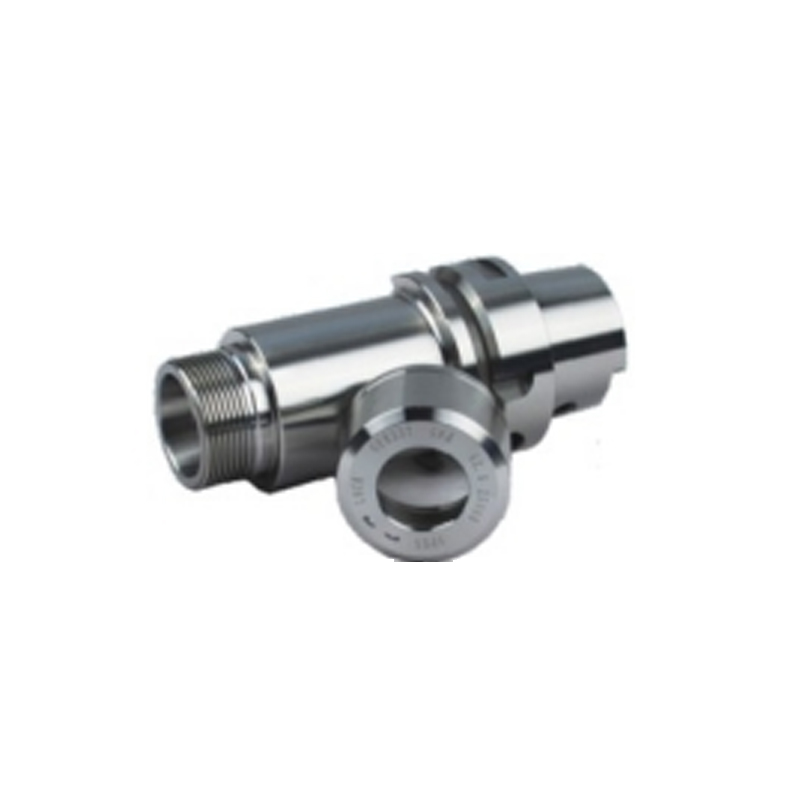
1. What Defines a High-Precision Cutting Tool
Precision cutting tools are designed not only to remove material but to do so with predictability, repeatability, and microscopic accuracy. A tool qualifies as “high-precision” when it demonstrates:
• Micron-level dimensional accuracy
Critical for aerospace and medical-grade machining where component errors cannot exceed a few microns.
• Controlled cutting edge geometry
Edge sharpness, rake angle, and clearance angle must be engineered to match specific materials and cutting conditions.
• Exceptional stability during high-speed machining
The tool must maintain a balanced cutting force and resist deflection and chatter.
• Long and predictable tool life
Tool wear must be uniform, allowing consistent cycle times and reliable production planning.
• Material-specific optimization
Different substrates—aluminum, titanium alloys, hardened steel, stainless steel, and composites—require tailored coatings and geometries.
These performance requirements directly dictate the materials and manufacturing processes used by companies like HAOCHENG.
2. Material Engineering: The Foundation of High Tool Performance
The substrate determines a cutting tool’s ability to withstand heat, pressure, and abrasive wear. Modern high-precision cutting tools commonly use:
• Ultra-fine grain tungsten carbide
With grain sizes as small as 0.2–0.5 µm, ultra-fine carbide offers:
Higher transverse rupture strength
Exceptional edge sharpness
Better resistance to micro-chipping
• Powder metallurgy high-speed steel (PM-HSS)
Ideal for complex geometries requiring improved toughness and flexibility.
• Cermet and ceramic composites
Suitable for high-speed finishing where thermal resistance is critical.
• Polycrystalline diamond (PCD)
An optimal choice for non-ferrous metals, carbon fiber composites, and abrasive plastics.
• Cubic boron nitride (CBN)
Engineered for hardened steels, die steel, and difficult-to-cut alloys.
By selecting the proper substrate for each application, HAOCHENG ensures tools deliver consistent performance from roughing to ultra-fine finishing.
3. The Role of Coatings: Extending Life and Enhancing Precision
Coatings have evolved from basic TiN layers to highly sophisticated nanocomposite structures. High-precision cutting tools usually apply:
• TiAlN / AlTiN coatings
For high-heat stability and oxidation resistance.
• DLC (Diamond-Like Carbon)
For extremely smooth surfaces in non-ferrous machining.
• PVD multilayer coatings
Combining hardness, lubricity, and thermal protection.
• Diamond-coated carbide
For maximum durability in abrasive materials.
Coatings influence not only tool life, but also surface finish quality, chip evacuation, and temperature management—all essential for consistent precision.
4. Manufacturing Technology: Where Precision Is Born
High-precision cutting tools rely on advanced manufacturing equipment and rigorous process controls. HAOCHENG integrates multiple engineering principles into its production:
• 5-axis CNC tool grinders
Ensure complex geometries such as variable helix flutes, progressive rake angles, and multi-radius profiles.
• Automated edge preparation
Micro-edge honing creates a stable cutting edge while preventing chipping.
• Laser measurement systems
Guarantee micron-level dimensional consistency.
• Dynamic balancing
Critical for high-speed machining where even slight imbalance affects surface quality and tool life.
• Batch consistency control
Ensures every tool behaves identically in automated production environments.
This combination of digital manufacturing and strict quality control is the backbone of HAOCHENG’s precision tooling solutions.
5. Application Areas and Why Precision Matters
Aerospace Manufacturing
Machining titanium and nickel alloys requires maximum stability and controlled tool wear. High-precision tools reduce vibration and prevent micro-cracks in critical components.
Automotive Powertrain and EV Components
From aluminum housings to hardened gear steel, precision tools enable complex multi-stage machining with minimal tolerance accumulation.
Medical Instruments and Implants
Cutting tools must maintain extremely clean edges and predictable performance to meet FDA and ISO standards.
Electronics and Semiconductor Tooling
High-precision micro-end mills produce fine grooves, micro-holes, and circuit-board contours.
Mold & Die Manufacturing
Advanced carbide tools ensure high-speed milling with superb surface integrity, minimizing polishing time.
Across all sectors, precision tools reduce scrap, lower cost per part, and enhance machine utilization rates.
6. Why Manufacturers Choose HAOCHENG
HAOCHENG has earned trust in global machining markets by delivering tools that emphasize:
-
Dimensional accuracy
-
Material-specific design
-
Stable high-speed performance
-
Longer tool life
-
Consistent batch-to-batch quality
-
Application engineering support
Whether for high-volume CNC machining or ultra-delicate finishing, HAOCHENG provides robust tooling solutions that optimize productivity and reduce downtime.
Conclusion: Precision Tools for a Demanding Manufacturing Future
As industrial components become more complex and tolerances more demanding, high-precision cutting tools are indispensable in maintaining manufacturing competitiveness. Through advanced materials, engineered geometries, top-tier coatings, and digital manufacturing processes, HAOCHENG continues to push the boundaries of cutting accuracy and long-term performance.
Manufacturers seeking improved efficiency, stable machining quality, and reduced operational cost will find a long-term partner in HAOCHENG’s high-precision tooling portfolio.

 English
 Arabic
 French
 Spanish
 Portuguese
 Turkish
 Dutch
Dutch
 Italiano
 Russian
 Romaian
 Portuguese (Brazil)
 Greek
Greek